Dear ,
It’s been a busy start to the year for Livestock SA, with the surprise announcement from China regarding the beef quota and tariff changes for 2026 whipping the national press into a frenzy. Despite trying to have a few days off, I was back in front of the camera & behind the microphone for Livestock SA on New Year’s Eve making sure that our state was well represented in the conversations about this issue.
This was a pretty good indication as to how the year will continue for Livestock SA. We have a busy period ahead across policy, advocacy and industry engagement. |
|
With the South Australian State Election approaching, we are engaging early and proactively to ensure the needs of livestock producers are understood before commitments are made. We have been meeting with Ministers and senior decision-makers across a range of portfolios, including Primary Industries, Environment and Infrastructure and Transport, recognising that decisions affecting our industry extend well beyond a single department.
We are also meeting with the Opposition to discuss Livestock SA’s election priorities. This engagement is non-partisan and focused on practical outcomes for members, ensuring livestock production, animal welfare and regional communities remain front of mind throughout the election period.
Advocacy during this period is also focused on protecting non-negotiables for livestock producers. We are actively engaging on issues such as water policy, firearms regulation and biosecurity implementation to ensure reforms are practical, proportionate and risk-based. These are not discretionary matters for producers - they go directly to animal welfare, safety and the ability to continue to produce food and fibre for South Australia and the rest of the world, and Livestock SA will continue to hold a clear, consistent line on behalf of members.
We have also commenced formal consultation on proposed reforms to the Sheep Industry Fund and Cattle Industry Fund, ahead of the required regulatory remake in 2026. Independent analysis confirms these funds deliver strong value for producers, particularly in areas such as animal health, biosecurity, traceability and predator control.
However, current settings are under pressure and no longer reflect the scale and complexity of today’s challenges. This consultation is about ensuring industry funding remains fair, effective and sustainable, and producers will have the opportunity to shape the final recommendations put to government. I encourage ALL members to read the information that we send to you, attend consultations where possible, participate in any surveys you may get and most importantly – when the time comes – vote.
As always, any member is welcome to contact me to discuss any issues you might have, or feel free to reach out to any of the Livestock SA board members to share your thoughts, ideasand concerns.
Thank you for your continued support and engagement. The months ahead will involve important conversations and decisions, and Livestock SA remains committed to representing your interests clearly, constructively and credibly.
Kind regards, Gillian Fennell Chair, Livestock SA 0419 839 174 | 08 8297 2299 | [email protected] |
|
The SA Red Meat and Wool Blueprint 2030 is our state’s long term strategic roadmap. It sets the direction for industry growth, investment, research and policy over the rest of the decade.
It focuses on ensuring South Australia’s $4billion livestock sector remains productive, sustainable, competitive and adaptable in a changing environment.
The Blueprint is structured around five key pillars:
Our livestock Our environment Our market access Our people
Our industry
Together these pillars guide industry wide investment priorities policy development and funding decisions through to 2030.
You will be hearing a lot more about our Blueprint in 2026. |
|
,Have your say on the Regulations Review.
Livestock SA is consulting with South Australian sheep and cattle producers and the broader industry on the scheduled review of the Sheep Industry Fund (SIF) and Cattle Industry Fund (CIF) regulations.
The regulations must be remade by 1 September 2026, following a one‑year extension due to drought. This review is a chance to ensure both funds remain fair, sustainable and fit for purpose, while continuing to deliver on industry priorities. Feedback will inform final recommendations to the Minister for Primary Industries and Regional Development in May 2026.
Why Change Is Needed
Contribution rates have not increased since 2016–17, despite rising costs and growing industry demands. Funding applications now exceed available revenue by 2:1 for SIF and 3:1 for CIF, putting pressure on critical programs such as animal health, biosecurity, traceability and predator control.
An independent review completed in September 2025 confirmed these investments deliver strong returns for producers, and the broader industry, but warned of structural under‑funding from 2027 without reform.
What’s Being Proposed SIF: A staged increase to $0.75 per head over three years from October 2026, and lifting the collection trigger price from $5 to $10 per head. CIF: Moving from a per‑NLIS device charge to a $1.50 per‑transaction contribution, improving fairness and alignment with national levies.
Get Involved Consultation runs February–March 2026, with online voting in April. This is an industry styled process with your feedback shaping the recommendations we make to government.
|
|
Livestock SA is pleased to partner with AWI Extension SA to deliver the 2026 Sticky Beak Days. Supported through the Red Meat Challenges Projects, funded by the South Australian Government’s $73 million Drought Response Package, these practical morning sessions will focus on both managing and rebuilding the flock (location dependent). Whether you are rebuilding after challenging seasons or planning ahead, this interactive event brings producers together to exchange insights and explore practical pathways forward. Presenters include:
Nathan Scott, Achieve Ag Solutions – Practical strategies and options for flock rebuilding Chris Scheid, Moore Australia – Financial considerations and implications of rebuilding Deb Scammell, Talking Livestock – Nutrition decisions when rebuilding numbers Join us for a practical, discussion-based morning focused on informed decision-making and confident flock rebuild planning. The 2026 Sticky Beaks will be held at the following locations: Yallunda Flat – 16 February Yantanabie – 17 February Merriton via Crystal Brook – 18 February Burra – 19 February Wangolina – 24 February Ashville via Meningie – 25 February Southern Mallee – 26 February Wunkar – 27 February
To register for these events, please visit the AWI Extension SA website https://www.awiextensionsa.com/events/
|
|
Livestock SA continues to support producers to strengthen on-farm decision-making, business resilience and drought preparedness.
As part of the program extension, a series of targeted masterclasses and alumni revisit sessions will be delivered across priority regions during February–March 2026. These activities respond directly to producer feedback and focus on practical tools that can be applied immediately within farm businesses. What’s on offerThe upcoming AgRi-Silience 2026 activities include:
Masterclasses delivered by experienced advisors and facilitators, addressing priority topics such as farm business performance, financial literacy, risk management and planning for seasonal variability.
Revisit sessions for past AgRi-Silience participants, providing an opportunity to reconnect, reflect on progress, and refine business and resilience plans with peer support. Sessions are designed to be practical, discussion-based and regionally relevant, supporting producers at different stages of their resilience journey. Who should attendProducers who have previously participated in AgRi-Silience workshops or masterclasses and wish to refresh and build on their learnings.
Producers seeking practical tools, peer-to-peer learning and targeted advice to support business decision-making under ongoing seasonal and economic pressures. Delivery timeframeActivities will be delivered across South Australia during February–March 2026, with locations prioritised based on regional need and demand.
For more information, please contact Sophie Ashby – Project Officer via phone 0447 075 123 or email [email protected] |
|
You are invited to attend the Livestock SA Regional Round Up in Robe. This is a great opportunity to stay informed and connect with fellow producers.
Date: Friday, 20 February 2026 Time: 6pm to 9pm Location: Robe Football Club, O'Halloran St, Robe SA 5276 Cost: FREE with dinner included Agenda: RSVP by 16 February to secure your spot and enjoy an evening of informative presentations, great company, and a complimentary dinner.
Click Here to RSVP
|
|
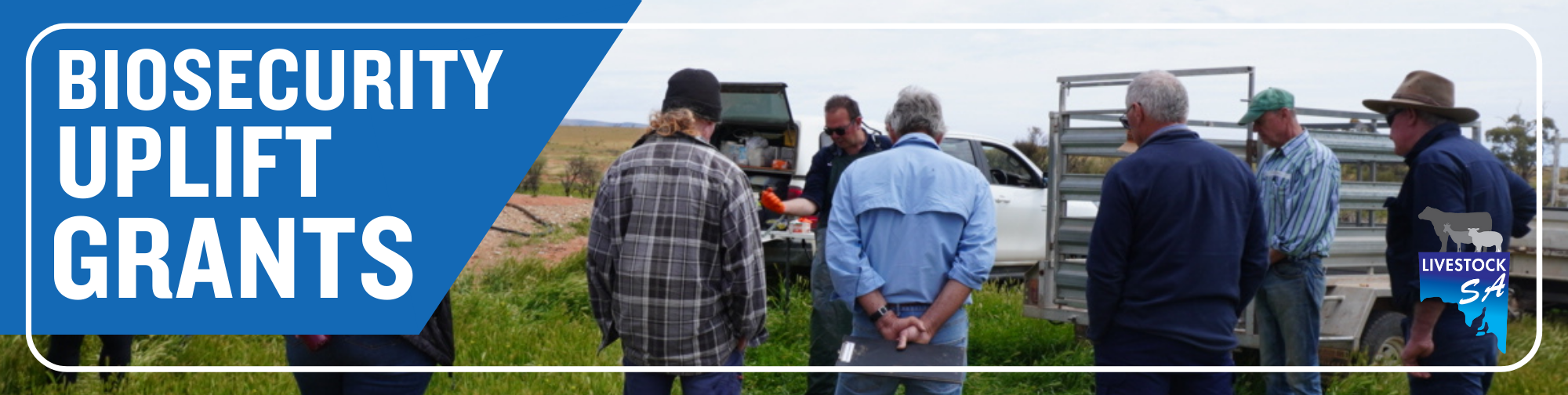
Livestock SA is inviting applications for the SA Livestock Biosecurity Uplift Grants, supporting practical, scalable projects that strengthen livestock biosecurity across the state. Funding is available for both new and existing initiatives that demonstrate clear industry-wide benefit and align with the SA Red Meat & Wool Blueprint 2030.
Apply or learn more below. |
|
State election puts livestock priorities in the spotlight
With the South Australian state election approaching, Livestock SA is urging all political parties to commit to policies that secure the long-term strength, resilience and competitiveness of the livestock industry.
Livestock producers manage more than half the state’s landmass, underpin regional communities and support around one‑third of South Australia’s manufacturing base. Livestock SA has presented both government and opposition with a clear, evidence‑based set of priorities drawn from the SA Red Meat and Wool Blueprint 2030, focused on practical, investable actions.
Key priorities include enabling producers to participate in emerging natural capital markets, fixing critical regional freight infrastructure, establishing a dedicated rural finance and development agency, addressing workforce shortages and regulatory duplication, and strengthening biosecurity through targeted infrastructure investment.
The investment required is modest compared to the returns: stronger regional economies, resilient supply chains, protected export markets and a globally competitive livestock sector. As the election debate intensifies, Livestock SA is calling for more than slogans — and clear commitments to back what underpins South Australia’s economy. |
|
Supported through the Red Meat Challenges Project, funded by the South Australian Government’s $73 million Drought Response Package, Livestock SA continues to deliver targeted support for producers during ongoing seasonal and financial pressure.
Through this program, Livestock SA is strengthening financial capability and peer-to-peer learning in high-priority regions. Activities are designed to provide practical tools, trusted advice, and opportunities for producers to learn from each other as they navigate a high-pressure operating environment.
Two upcoming financial literacy workshops will be delivered in February and March, supporting producers to:
· Understand and map cash flow across their business · Review and interpret their current financial position · Assess debt management options · Evaluate land purchasing and leasing decisions · Plan for rising input costs · Prepare for upcoming bank and finance reviews
Workshops will be delivered by Paige Cross, Cross Country Management.
Upcoming workshops · Mid North – Jamestown: Friday 20 February · Fleurieu and Hills – Strathalbyn: Wednesday 18 March
Register below.
These workshops form part of Livestock SA’s continued delivery of evidence-based support to build resilience, confidence, and informed decision-making across South Australian farm businesses. |
|
Managing lameness to improve production
A 2-day workshop held in Lucindale on 11 and 12 February for contractors and sheep vets interested in designing and overseeing footrot management and eradication programs. Day 1 will cover diagnosis, control versus eradication, and biosecurity planning, while day 2 provides hands-on experience within an active eradication program, including trimming, grinding, and recognising various foot conditions.
The workshop costs are $150/day (lunch included), and participants will be added to Livestock SA’s “Happy Feet, Happy Sheep” advisor list upon completion.
For more information, please contact Brittany Voss at [email protected] or Colin Trengove at [email protected].
|
|
Tips to maximise successful breeding programs Written for producers, breeders and importers, the first few weeks after imported livestock arrive quietly determine everything that follows. From condition scores, fertility, conception rates and long-term performance, this critical phase is often underestimated or rushed. A practical eBook has been created to cover the critical first 21 days. Download the book here
Global Sheep Forum Next Generation Program You have a few more days yet to apply for the Global Sheep Forum Next Generation Program, which includes online leadership masterclasses, international project collaboration and a face-to-face program in South Australia, including on-farm visits and attendance at LambEx26.
The 2026 Next Generation Program is open to sheep producers and those working directly in the Australian sheep industry aged 18–35 years and closes on 16 February. For more information, including eligibility details and how to apply visit Next Generation Program |
|
Highlights from a comprehensive update from our partners at Workplace Horizons.
Tougher workplace enforcement in agriculture: New wage theft laws, closer scrutiny of labour hire, and increased Fair Work inspections raise compliance risks for farm businesses.
Written employment contracts are essential: Clear, compliant contracts help prevent disputes, protect assets and reduce underpayment and dismissal risks.
Superannuation and abandonment risks: The ATO is escalating action on unpaid super, while mishandling job abandonment can trigger unfair dismissal claims.
Major law changes ahead: Paid Parental Leave increases from July 2026, with reviews underway that may affect hours, leave, redundancy and flexibility rights.
Labour market remains tight: Low unemployment, record hours worked and declining casual employment continue to shape hiring conditions.
|
|
11 February Happy Feet, Happy Sheep – Train the Trainer (Day 1) 12 February Happy Feet, Happy Sheep – Train the Trainer (Day 2) 16 February Sticky Beak Tumby Bay 17 February Sticky Beak – Central EP 18 February Sticky Beak – Merriton via Crystal Brook 19 February Sticky Beak – Mid North 20 February Regional Round up – Robe 20 February Red Meat Challenge – Jamestown 24 February Sticky Beak – Wangolina 18 March Red Meat Challenge – Strathalbyn Our next newsletter will be out on March 1, 2026.
For more information and future events, please click here. Submit your event for promotion. |
|
Copyright (C) 2025 Livestock SA. All rights reserved.
Want to change how you receive these emails?
You can update your preferences or |
|
|